Source Motorcycle Water Tank with Cap for Racing, Off-Road, and Daily Commuting
Find a Motorcycle Water Tank with Cap from 30 verified listings. Compare specifications such as material, capacity, and certification to identify suitable options for your specific vehicle requirements and sourcing needs; compare the available evidence and request quotations based on your requirements.
Key considerations
Products List


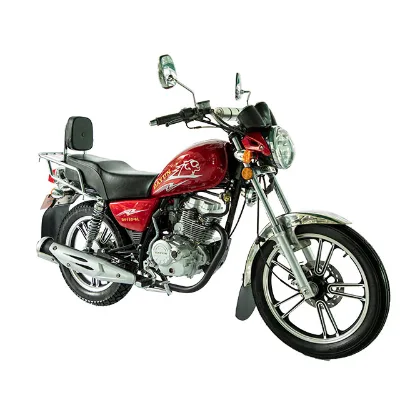


500L Water Tank with Reliable Nylon Wheels and Technical Support Options
$65.00 - $68.00
MOQ: 20 Pieces

Comprehensive Sourcing Guide
Motorcycle Water Tank with Cap Sourcing Guide
Sourcing a Motorcycle Water Tank with Cap requires distinguishing between general industrial storage vessels and components specifically engineered for two-wheeled thermal management. The available market data indicates a strong presence of stainless steel tanks, often constructed from SUS304 or SUS316L, which are suitable for high-purity fluid handling. Buyers must verify that the listed "Low Temperature Storage & Transportation Equipment" or "Fermentation Tank" descriptions are not misapplied to motorcycle applications, as these terms typically denote large-scale industrial processing units rather than compact vehicle components.
Procurement decisions should focus on the specific structural requirements of the motorcycle chassis, ensuring the selected tank accommodates the necessary capacity range while maintaining a low center of gravity. While some listings mention capacities from 100L to 5000L, a motorcycle application will likely require a significantly smaller volume, necessitating a careful review of the "According to Capacity" specifications. Buyers should prioritize suppliers who explicitly confirm the tank's compatibility with vehicle mounting systems and thermal expansion limits specific to engine cooling environments.
Product Scope and Observed Listing Signals
The observed product listings reveal a diverse range of industrial equipment, including dump trailers and large-scale storage tanks, which may confuse buyers seeking specific motorcycle components. Signals such as "Alloy Steel" and "Natural Ingredients" suggest a mix of heavy machinery and food-grade processing equipment, requiring the buyer to filter strictly for stainless steel construction suitable for liquid cooling. The presence of "Mirror Polish or Matt Polish" finishes indicates that surface treatment is a variable attribute, which is critical for corrosion resistance in the humid and vibration-heavy environment of a motorcycle.
Buyers must scrutinize the "Structure" and "Type" attributes to ensure the product is not a stationary industrial vessel like a "Conical Bottom" tank designed for fermentation. The "Metal Tank" designation is broad and does not guarantee the specific geometry required for a motorcycle frame. It is essential to confirm that the "Dumping Direction" or "Air Brake Type" attributes are irrelevant to the final product, as these features belong to heavy transport trailers and not to vehicle fluid reservoirs.
Technical Specifications to Verify
Technical verification must begin with the material composition, specifically confirming the use of SUS304 or SUS316L stainless steel to prevent rust and ensure longevity in a cooling system. The "Max Working Pressure" of 2 MPa observed in some listings provides a benchmark for pressure testing, but the actual operating pressure for a motorcycle cooling system is typically much lower. Buyers should request detailed pressure ratings and burst strength data to ensure the tank can withstand thermal cycling without leaking or deforming under the specific load conditions of a motorcycle.
The structural integrity of the tank is further defined by its "Jacket" configuration, such as a "Dimple Jacket" or "Single Layer," which impacts heat exchange efficiency. For a motorcycle application, the "60 Degree Conical Bottom" found in industrial tanks may be unsuitable for fluid drainage and air venting. Buyers must verify the exact dimensions and mounting points, ensuring the "Weight" and "Capacity" align with the vehicle's payload limits and that the "Nosewheel Steering Mechanism" or similar heavy-duty features are not mistakenly included in the product definition.
Compliance and Safety Documentation
Compliance verification is critical when sourcing components that interact with engine cooling systems, requiring confirmation of relevant safety certifications. The observed "CE" and "ISO 9001" certifications are common in the industrial sector and serve as a baseline for manufacturing quality, but they do not automatically guarantee compliance with automotive safety standards. Buyers should explicitly request documentation proving that the tank meets specific automotive fluid containment regulations, as general industrial certifications may not cover the vibration and thermal shock requirements unique to motorcycles.
Safety documentation must also address the "Surface Treatment" and "Process" methods used, such as "Polishing" or "Thermal Processing," to ensure no harmful residues remain in the fluid path. The "Manufacturing Process" of "Casting" or "Fermentation Tank" production implies different quality control protocols than those used for automotive parts. Buyers should demand a Certificate of Analysis for the "Alloy Steel" or "SUS304" material to verify that the chemical composition meets the necessary standards for food-grade or automotive-grade fluid contact, preventing contamination of the cooling system.
Cost Drivers and Commercial Terms
Cost drivers for motorcycle water tanks are heavily influenced by the material grade, with SUS316L commanding a higher price than standard SUS304 due to superior corrosion resistance. The "Customization" availability noted in the listings allows for tailored dimensions and mounting configurations, which can significantly increase the unit cost compared to standard off-the-shelf industrial tanks. Buyers should anticipate that the "Packing" method, whether "by Carton" or "Wooden Case," will impact the final landed cost, especially for international shipping where heavy industrial packaging is often unnecessary for smaller vehicle components.
Commercial terms must clarify the "MOQ" and "Lead Time," as the observed range of 1 to 100 units suggests flexibility for small-batch orders. However, the "Production Standard" of "3-10 Tons" or "1pcs" indicates a mix of bulk and single-unit capabilities that may affect pricing tiers. Buyers should negotiate based on the "Factory Location" in Chongqing, China, considering that logistics costs for heavy steel components can vary, and ensure that the "According to Capacity" pricing model is transparent to avoid hidden fees for custom volume adjustments.
Supplier Qualification and Quality Control
Supplier qualification requires a deep dive into the "Factory Location" and the specific "Core Components" they manufacture, ensuring they have experience with automotive-grade fluid systems. The presence of "Pressure Vessel" as a core component suggests the supplier has the capability to handle pressurized systems, but buyers must verify if this experience extends to the smaller scale and specific vibration profiles of motorcycles. A supplier with a "Casting" process background may lack the precision welding techniques required for thin-walled motorcycle tanks, necessitating a review of their specific production history.
Quality control protocols should include rigorous testing of the "Surface Finish" and "Sealing" integrity, as the "Mirror Polish" or "Matt Polish" finish is not merely aesthetic but affects cleanability and corrosion resistance. Buyers should request sample testing results for the "Max Working Pressure" and "Temperature" resistance to ensure the tank will not fail under engine heat. The "Certification" status of "ISOCondition:New" or "CE" should be cross-referenced with the specific product batch to ensure that the quality management system is actively applied to the motorcycle tank production line.
Long-Term Procurement Checks
Long-term procurement success depends on establishing a clear supply chain for replacement parts and verifying the durability of the "Tank Material" over time. Buyers should monitor the supplier's ability to maintain consistent "Material" quality, specifically the "SUS304 or SUS316L" grade, as fluctuations in raw material quality can lead to premature failure in the cooling system. Regular audits of the "Surface Treatment" process are necessary to ensure that the "Polishing" or "Processing" methods remain consistent, preventing the introduction of surface defects that could initiate corrosion.
Procurement strategies must also account for the "Standard" compliance, ensuring that the "GB" or "ISO" standards referenced in the listings remain current and applicable to the target market. Buyers should implement a feedback loop to track any "Usage" issues, such as leaks or structural fatigue, to validate the "Low Temperature Storage" or "Industrial" design assumptions. Finally, maintaining a relationship with the supplier for "Customization" updates ensures that the tank design can evolve with new motorcycle models, securing a reliable supply of compatible components for future production runs.
FAQs
What materials are used for motorcycle water tanks?
Motorcycle water tanks are typically constructed from SUS304 or SUS316L stainless steel to ensure durability and corrosion resistance. These materials provide a reliable barrier against rust and environmental wear. Some variants may also utilize alloy steel for enhanced structural integrity. The choice of material depends on specific application requirements and budget constraints for optimal performance.
Can motorcycle water tanks be customized?
Yes, customization is available for motorcycle water tanks to meet specific design needs. Buyers can request customized colors, such as silver or other finishes, to match their vehicle aesthetics. Additionally, capacity can be tailored within ranges like 100L to 5000L for industrial applications. This flexibility ensures the product aligns perfectly with unique operational or visual requirements.
What certifications do motorcycle water tanks have?
Motorcycle water tanks often carry CE, ISO 9001, and SGS certifications to verify quality and safety standards. These certifications indicate compliance with international manufacturing processes and quality management systems. Buyers can rely on these credentials to ensure the product meets rigorous industry benchmarks for reliability and performance in various operational environments.
How is the surface finish of the tank?
The surface finish of motorcycle water tanks can be mirror polish, matt polish, or 2b finish. These options provide different aesthetic and functional benefits depending on the application. The polishing process ensures a smooth, clean surface that is easy to maintain. This attention to detail enhances the overall appearance and longevity of the tank in demanding conditions.
What is the typical packaging for these tanks?
Packaging for motorcycle water tanks is typically done in wooden cases or according to customer requirements. This method protects the product during transit and handling. Some items may also be packed in cartons or steel frames for container shipping. The packaging strategy is designed to prevent damage and ensure the tank arrives in pristine condition for immediate use.